
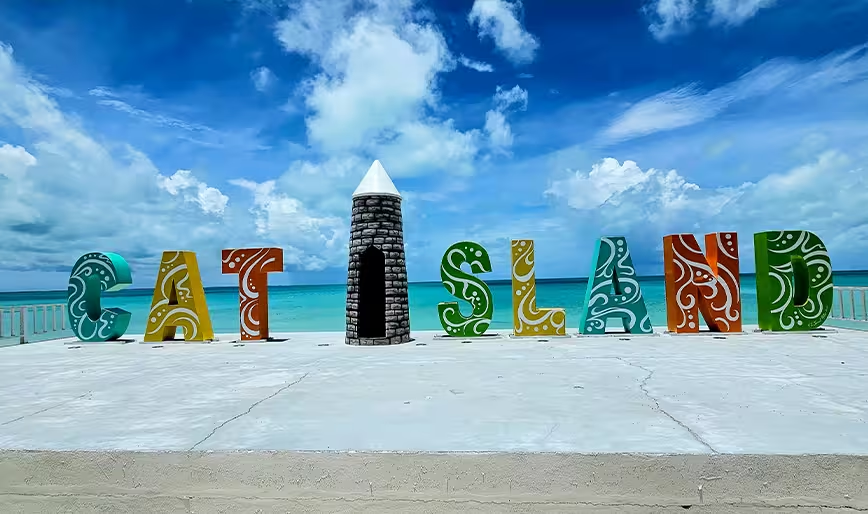
Highlights Of Cat Island
Cat Island remains an unspoiled slice of The Bahamas. Rich in culture and history, it is made for exploring. Beyond its long stretches of beach are old ruins, caves, blue holes, and historic sites that reveal different sides of the island—and give you good reason to pull off the road.
On the storied isle, you can climb to the highest point in The Bahamas; float without sinking in a saltwater pond; follow old railway tracks toward the sea; walk through the coppice in search of a blue hole.
There are seven recommended places to experience while you’re on Cat Island:
1. COMO HILL / MOUNT ALVERNIA
The Highest Point in The Bahamas
At 206 feet above sea level, Mount Alvernia is the highest point in The Bahamas. Getting there means leaving the road behind and making the short climb to the summit.
The stone path leads upward past the Stations of the Cross created by Monsignor John Hawes, the Catholic priest better known in The Bahamas as Father Jerome. At the top, you’ll find The Hermitage, the small stone retreat he built by hand.
Step inside, wander around the grounds, then take in the view. From up here, Cat Island opens around you—green hills, blue water, and miles of largely untouched landscape.
It is a short climb with a very big reward.
2. HEALING POND
Port Howe
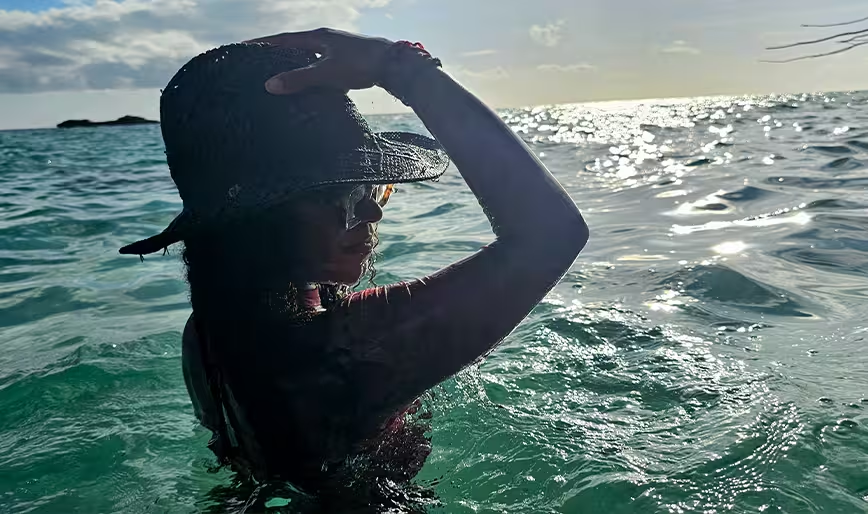
Step into the Healing Pond and something unusual happens: You float.
The water is so salty that staying on the surface takes very little effort. Lean back, lift your feet, and let the water hold you up. It is a strange sensation at first—and one of those experiences you’ll probably want someone nearby to photograph.
The pond near Port Howe has also earned a reputation over the years for its supposed healing properties, with local accounts connecting its mineral-rich waters to relief from various ailments. Those claims are part of the pond’s long-standing reputation rather than established medical fact.
Healing or not, the experience is the attraction. Get in. Lean back. And try to sink.
3. DEVEAUX PLANTATION RUINS
Near Port Howe
Near Port Howe, the remains of the Deveaux Plantation stand open to the elements, with old stone walls and sections of the former Great House offering a glimpse of Cat Island more than two centuries ago.
The property is associated with Col. Andrew Deveaux, the Loyalist military officer who led the 1783 recapture of Nassau from Spanish forces. As a plantation site, however, its history also belongs to the wider story of slavery, colonialism, and the plantation economy in The Bahamas.
Walk around the surviving structure and look closely. Heavy stonework, openings where windows and doors once stood, and the scale of the ruins begin to reveal what once occupied the site.
4. HISTORIC RAILROAD REMNANTS
New Bight
You don’t expect to find railway tracks disappearing into the sea on a Bahamian island.
But around New Bight, remnants of Cat Island’s old rail infrastructure can still be spotted along the shoreline, depending on the tide and shifting sand.
The tracks are connected to an earlier agricultural economy, when produce grown on Cat Island had to be moved toward vessels for export. Cotton, sisal, tomatoes, and pineapples were among the crops produced on the island at different points in its history.
Today, much of that infrastructure is gone. What remains makes the stop worthwhile: old iron, sand, and seawater coming together in a scene that feels almost out of place.
Go when the tide allows a better look.
5. MERMAID HOLE
Bain Town, Cat Island
Exploring the Mermaid Hole begins with the walk – a near 20-minute walk.
From Bain Town, the journey takes you away from the road and through Cat Island’s dense coppice before arriving at a secluded inland blue hole.

The blue hole gets its name from an old local legend that a beautiful mermaid lives beneath its surface. Whether you believe that part or not—the setting is interesting enough without it.
It promises a trek through the bush, a hidden body of water, and an experience completely different from another afternoon on the beach.
6. SIR SIDNEY POITIER CHILDHOOD HOME SITE
Near Arthur’s Town
Just outside Arthur’s Town is a quiet piece of Bahamian history.
Sir Sidney Poitier spent much of his childhood on Cat Island before leaving The Bahamas as a teenager and, eventually, becoming the first Black man to win the Academy Award for Best Actor.
The house where he lived no longer stands, but visitors can see the site and explore the settlement that shaped his early years.
There is something compelling about experiencing the landscape he would have known as a boy—the roads, the community, and the rural Cat Island surroundings—then considering just how far his life would take him.
From Cat Island to Hollywood. It started here.
7. The BAT CAVE
Duck your head, watch your footing, and give your eyes a moment to adjust.
The Bat Cave takes you underground into one of Cat Island’s natural hideaways. Off the main road on your to or from Arthur’s Town, the cave has a central entrance leading into its interior, where bats roost overhead.
Once inside, the temperature, light, and sound change.
Local accounts also connect the cave to earlier periods of Cat Island’s history, including stories of its use as a place of refuge. Today, the experience is much simpler: leave the bright Bahamian sunshine behind for a while and explore what lies beneath it.
Go with appropriate local guidance, respect the habitat—and definitely look up.
BONUS: CAT ISLAND HEROES WALL
While you’re in the area, stop at the Cat Island Heroes Wall, which recognizes notable people connected to the island.
Take a few minutes to read the names and discover some of the people Cat Island has given to The Bahamas and the wider world. It is an easy addition to the journey—and one that puts faces and names to the island’s history.
00 Comment
Leave a comment