
Spelunking Eleuthera’s caves: An adventure beneath the island
“Spelunking is a term used to describe exploring caves for recreational purposes with basic gear, without the technical methods, instruments, or goals of professional expeditions.”
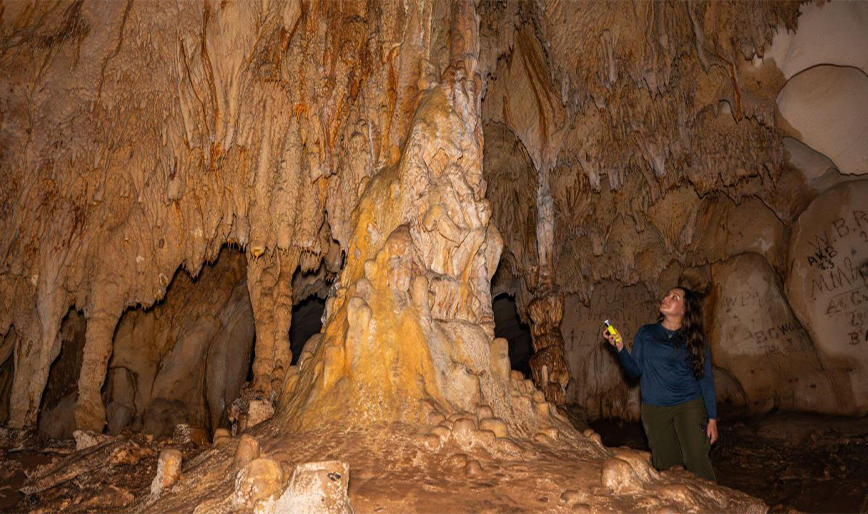
Boots on rock. Headlamp on. The cave swallows the last of the outside noise and trades it for dripping water, echo, and the dense stillness that only exists underground. We’ve come to Eleuthera, where an unassuming opening in the scrub drops into Hatchet Bay Cave, an extensive cave that feels like a second island below the one you know. Down here, light narrows to thin ribbons, formations rise out of the dark, and the cave starts telling the island’s story in stone.
One room rises high with columns and draperies. The next tightens you into a crouch, and tilts you into a side passage. In these rooms, the island keeps a second history, written on the ceiling and under your feet.
Along the walls you’ll find old markings, some left in charcoal in the 1800s, others more recent and less welcome. A faded rope still runs through parts of the cave and once served as a guide,

though it breaks in sections and shouldn’t be trusted. Hatchet Bay Cave unfolds in tiers, almost like floors in a building. The deeper you go, the bolder the route feels. The final level is flooded and ends in a deep drop, a point best respected rather than tested.
Spelunking in Eleuthera folds two stories together: the making of these caverns drop by drop, and the people who found purpose in them. Across different eras, caves on the island served very different roles: burial grounds for the Lucayans, hideouts for pirates, and places of shelter and worship for early settlers. They are archives you walk through.
All the way north, Preacher’s Cave is often considered the birthplace of British settlement in The Bahamas. This is where the Eleutheran Adventurers came ashore after their ship wrecked in 1648. Natural skylights pierce the ceiling and light the boulder that served as an altar for worship ceremonies held here for more than a century. Unlike Hatchet Bay Cave, this cave is open and accessible, and doesn’t require lights to explore.
Near Rock Sound, a short footpath leads to wooden stairs that drop into Cathedral Cave, a tall, cool chamber lit by sunbeams from roof openings. Long tree roots descend like columns, and when the light catches them, the space feels every bit like a natural cathedral.
All three caves are straightforward to locate thanks to road signs and reliable Google Maps directions. If you’re heading into Hatchet Bay Cave, bring two lights and a spare per person, wear closed-toe shoes, bring water, and keep your hands off the formations. In summer, bat colonies raise their young in parts of the caves, so move quietly and turn back before you disturb them.
For the open caves, visit when the sun is high, so the skylights throw strong beams for dramatic photos. Hatchet Bay Cave will require a flash to capture anything.
When you finally rise back to the surface, blinking at the brightness, the island feels wider than it did before. These caves show you a Bahamas shaped from the inside out. For a quiet place to stay while you explore both the island and its underground, Palm Tree Cottage in Whale Point is perfectly placed.
00 Comment
Leave a comment